
Evangelizing Vienna

A new installment of Journey of a New Christian. First-time reader? This introduction provides an overview. If you missed earlier installments, you can find them in this index to the series.
Missionaries Nate and Bethany Johnson visited our church this past week and gave us an unexpectedly fascinating glimpse of what it’s like to bring the gospel to post-Christian Europe. For the past 13 years, they’ve been living in Vienna, raising three girls, now aged 3, 8, and 12, and dedicating themselves full-time to the Evangelical movement there. Their most recent project has been to establish a new Free Church in the Vienna suburbs. The Johnsons have a long-standing connection to our church. Along with 14 other churches, ours contributes annually to support their ministry, and Bethany is related to one of our most active church families.
On Sunday morning, our usual Bible study classes were canceled to allow Nate and Bethany to share some of the progress our church is supporting. Nate began by addressing the elephant in the room: why would an American couple want to evangelize Europe, the continent that brought Christianity to America in the first place?
I was glad that Nathan took some time to delve into this question. Europe today is not the Christian Europe that sent a flood of believers to the American continent. The secular trend we see in United States is magnified in Europe. In Austria, a traditionally Catholic country, the percentage of the population identifying as Catholics has declined sharply from 80% in 1950 to approximately 50% in 2026.
The decline in Christian influence is even steeper than statistics suggest. Many who call themselves Christian would more accurately be termed cultural Christians, since they go to church only rarely and do not see faith as central to their lives. The infamous Sunday-morning Christians, who attend church but ignore Christ the rest of the week, have gradually morphed into “Chreasters” who attend only at Christmas and Easter, and more recently into something new that does not yet have a name: a group whose absence from church is measured not in months but in decades. If they show up at all it’s for christenings, weddings, and funerals—occasions that can’t be missed without offending their families. Cultural Christians have no saving relationship with Christ and do not experience the forgiveness promised in the Gospel. Nate and Bethany have committed their lives to spreading a message many Austrians have not heard in a very long while.
Establishing an evangelical church in a setting like this is a steep uphill climb. Unlike other countries where Christian communities struggle, Austrian law protects religious freedom. Missionaries aren’t in physical danger. Nevertheless, there are formidable obstacles to evangelism that don’t show up in laws or police blotters.
Chief among these, for the small group of Evangelicals that work alongside Nate and Bethany, is family loyalty to Catholic tradition. Catholics and Evangelicals share core beliefs in God’s sovereignty and the death and resurrection of Jesus, but there are also stark theological differences between them. The two groups disagree, for example, about the authority of the church, the nature of grace, and the efficacy of prayer through intermediaries such as Mary or the saints. While these two faith traditions live harmoniously alongside one another, it is not easy for someone brought up in one to switch to the other. In a society with deep Catholic roots, joining an evangelical church risks alienating loved ones, especially older family members with deep roots in the traditional faith.
Another obstacle Austrian Catholics and evangelicals alike have to contend with is comfort. Austria, like much of western Europe, is a country with a high median income, a generous social safety net, and a secular state that relegates sin to private conscience. When government and employers supply all our material needs, why look to God? Even death has been domesticated by the secular state. In 2022, Austria legalized euthanasia, allowing terminally ill patients to put an end to their suffering but also from a Christian perspective encroaching on God’s prerogative to give and take away life.
Government guarantees of comfort and material well-being, like all human institutions, are transitory, but often non-Christians don’t see that. If you’re living comfortably now, why would you worry about death, sin, or catastrophe? For people like these, Christ’s message of repentance and mercy is apt to fall on deaf ears.
In a post-Christian secular world, there is another obstacle to church-building. Many have grown up with the gospel but have not held it close to their hearts. The good news is old news—familiar but not inspiring. This is potentially a problem for any Christian denomination, but it is especially so for evangelicals. Ours is a religion of the heart. How do you reach someone who has heard the gospel already but feels no passion for Christ?
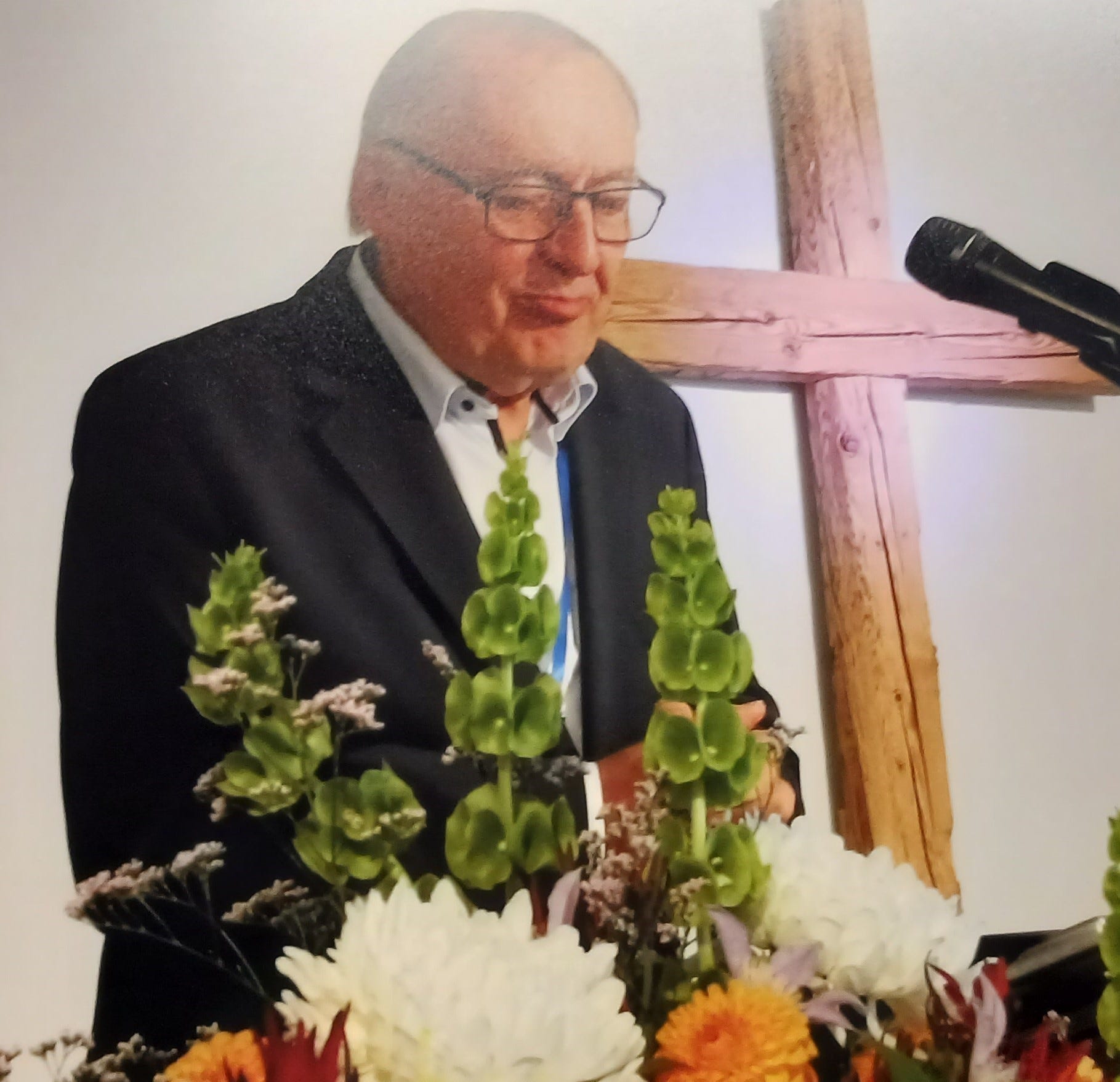
Ironically, this is one situation in which the missionary may actually enjoy an advantage compared to the native-born preacher. To those around him, he is not a known quantity. Everything he does or says is slightly off kilter, offering others a chance to see the Gospel through fresh eyes.
The impact of cross-cultural differences was thrown into sharp relief when I asked Nate what he found most jarring when he returned to America after living 10 years in Austria.
“People’s friendliness,” he replied without hesitation. When they visited Atlanta, for example, complete strangers would engage them in conversation, ask them where they were from, or tell them to “have a good day.” In Austria, people keep to themselves in public spaces. The friendliness of American evangelical churches, where people go out of their way to greet newcomers, must be a pretty strong clue to Austrian visitors that the new church is nothing like the church they remember from childhood.
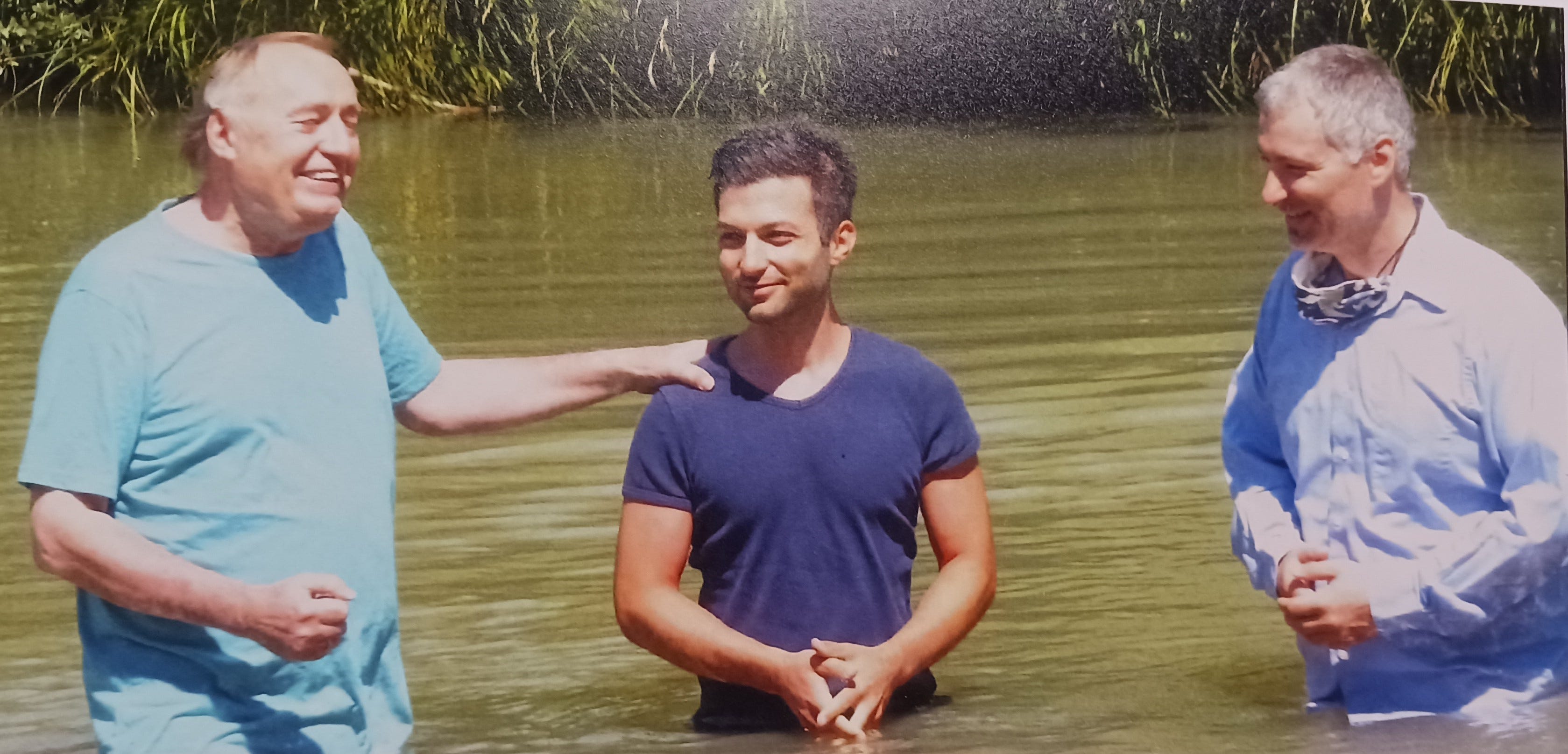
The Johnsons’ suburban church was founded in 2023. Not surprisingly, the congregation is still small—75 on good days, with a core group of regular attendees smaller than that. Bethany and Nate spoke fondly of some of the local people they’ve helped bring to Christ. Bethany met Karin, a native-born Austrian, in her online Bible study during COVID. Ironically the pandemic, by cutting people off from their usual circle of friends, led some of them to seek fellowship elsewhere, as Karin did in the Evangelical Bible study. To Karin’s family and friends, this was an odd choice, one that did not fit in at all with her previous loyalties, but the hours Karin had spent in God’s word had their effect. She held fast to Christ and was recently baptized.
Bert, too, came to Jesus through Bible study. Unlike Karin, he did not have to contend with a competing loyalty to another church. He grew up atheist in East Germany. His parents were members of the East German diplomatic service, and the family traveled extensively, which likely made it easier for him to feel at home in a church plant led by an American missionary. Bert suffers from intense migraines, which make normal social life difficult. Despite his atheist upbringing, he has found his passion in scripture. In the past year he has read through the whole Bible 6 times. He attends church faithfully, and Nate had noted with pride that he has recently volunteered to teach Sunday School classes.
Listening to the stories of these two converts, I got the impression they stood a little apart from the people around them, which probably makes their new religious affiliation less disruptive.
Nate’s description of the young men’s group he leads reinforced this idea. According to Nate, these young me feel themselves being pulled in all sorts of conflicting directions: by Tik-Tok theology; by Theobros, young conservative men committed to men’s exclusive leadership in family, church, and society; and by the dominant liberal ideology that calls into question masculine virtues, at times even the very idea of manhood. If you’re torn, you aren’t yet committed, and thus it’s less difficult to join a new church.
One of the most interesting people drawn to the church doesn’t fit this mold. This is the young man who represented the owner of the building where they rented space for their services.
Finding place for church turned out to be the most difficult part of church planting. It took several years of prayer and arduous effort before they found what they were looking for—the ground floor of a 3-story building owned by a Chinese woman who designed and made clothing but now wanted to retire and lease out the large space she used for her shop.
It was a complex arrangement, involving a long-term lease, major renovations, and consideration of the owner’s retirement plans. Nate observed that the agent seemed surprised by the patience and empathy of church leaders as they worked through these details.

When the church finally moved into its new quarters, that young man showed up at one of their services. At first the church leaders who’d worked with him assumed this was mere curiosity, but when he began to attend regularly, they thought back to his surprise at the way they negotiated. Before the young man ever heard the explicit message about Christ, their conduct must have struck a chord in him.
Reflecting on the unintended testimony of conduct, I wondered how the Johnson children were raised and what impression Nate and Bethany’s parenting has made on local people they have encountered.
The girls weren’t present at their parents’ Sunday morning church presentation—a good sign, I thought. They didn’t need to be on display for the whole congregation to see. In answer to a question about their schooling, Nate explained that they attend a conservative private Catholic school with a more rigorous curriculum than is typically found in state schools. Many parents there share Evangelicals’ concerns about secular social trends. I wondered, though, how the family deals with what is taught in catechism classes, some of which likely conflicts with evangelicals’ understanding of scripture.
The youngest girl, age 3, attends a secular day care taught in the Montessori style—a permissive approach emphasizing children’s freedom to choose their own path of learning. That, too, is a countercultural choice for evangelical parents. Where their children are concerned, the Johnsons have made thoughtful decisions and aren’t afraid to defend them to a roomful of people.
Several of us met the children the next day at an evening reception at Bethany’s uncle’s house. They behaved pretty much like typical American children, minus the squabbling, whining, and complaints about boredom. When guests first arrived, they sat with the adults for a while, engaged in some sort of game on the floor, but when cousins and other children their age showed up, they all galloped upstairs and weren’t seen again until dinner was ready. Bethany had mentioned they missed home and their friends in Vienna. I wondered if, having lived in Austria all their lives, they would find America a jarring experience, but if they felt out of sorts, I saw no sign of it that evening.
I learned a lot more than I expected to from the Johnsons on the two occasions I met them. The biggest lesson, I suspect, is about what the lives of missionaries are like. What I expected, based on books and movies about missionaries in exotic locations, was a daily routine of fear, tension, and danger, punctuated at long intervals by dramatic breakthroughs, as in those movies when a formerly hostile tribe decides en masse to accept Christ.
The Johnsons’ life—taking into account differences in age and occupation—was more like my own than I expected. We patiently cultivate friendships in the hope that we will lead someone to Christ. We nurture and are nurtured by fellow Christians. We try to live in such a way that our light will shine for all those whom we encounter, understanding that only the Holy Spirit can inspire them to search out the source of that light.
Nate and Bethany, who met and married in Illinois, have traveled to a far country, a country of unfamiliar customs and language and social networks they are not part of. In geographical terms, they have traveled much farther than I have or ever expect to. In spiritual terms, though, I too have traveled a great distance. I grew up in an agnostic home and spent most of my life as an unbeliever among unbelievers. Now that I’ve found Christ, I am learning a new language of faith, and I am trying to use it to talk to people who cling to the perspective of my former self. It is a lonely, arduous, and sometimes frustrating business, but it gives me a sense of purpose I was never able to find in my life as an agnostic.
In contributing to our church in support of the Johnsons, I have an odd feeling that I am supporting a younger, geographically distant replica of myself. I suppose that recognition of my own situation in theirs is part of what membership in Christ’s kingdom means. I have never felt kinship with other Christians so strongly as I did listening to the Nate and Bethany talk about their long struggle to build up that tiny free church in suburban Vienna.
Clicking “like” makes it possible for other readers to discover this post.
Two good books to help understand why evangelizing in the West is difficult right now: "A Secular Age" by Charles Taylor" and "How (Not) to Be Secular: Reading Charles Taylor" by James K.A. Smith. The first one is c.750 pages, so the second one is a much shorter introduction to Smith's ideas.
BTW the best way to understand the work of most modern missionaries, wherever they live, is to spend several weeks with them in their own situation.
Did you get my reply to your message to me on 4 April? I just sent it a few days ago.